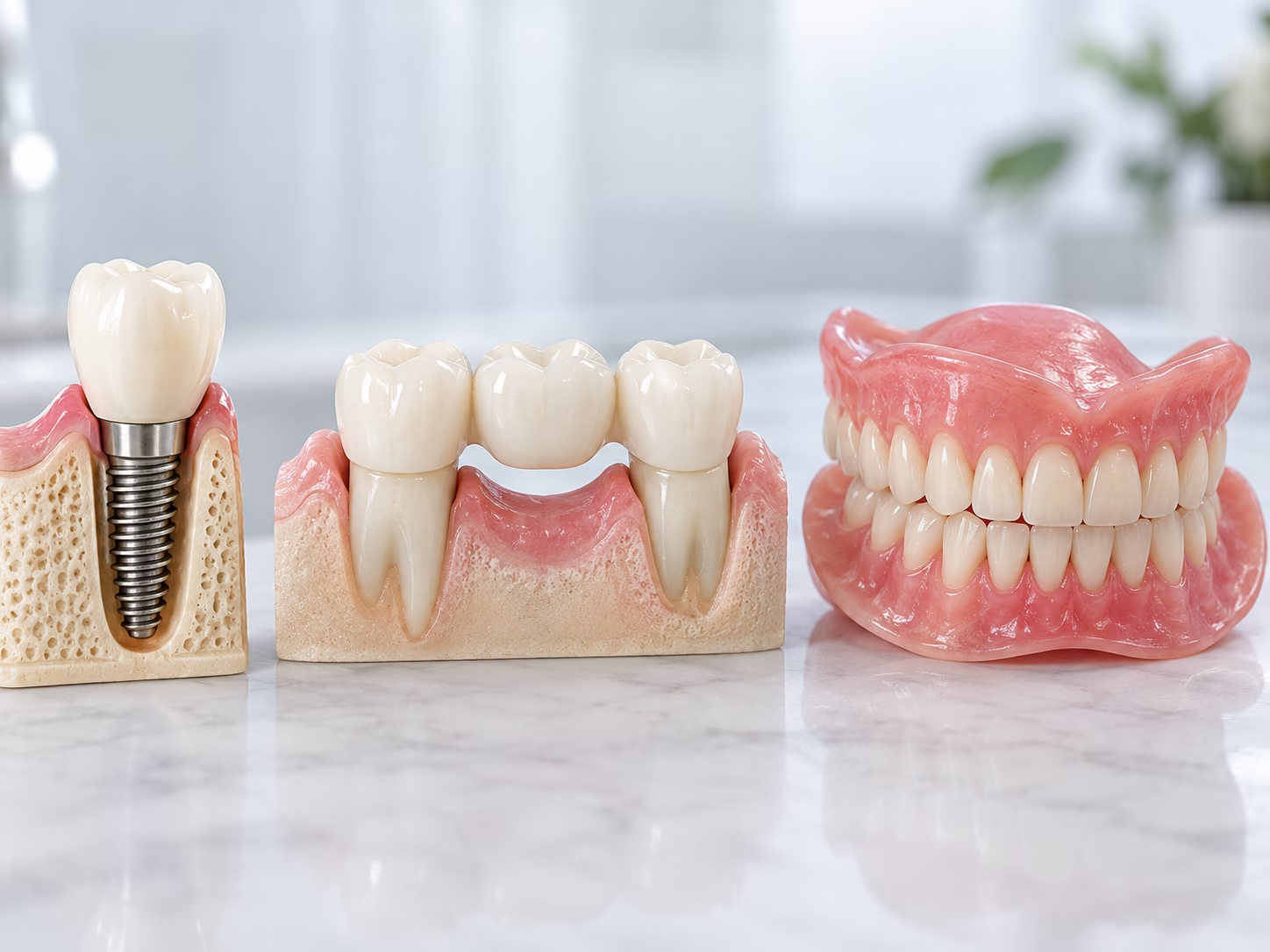
Dental implants, bridges and dentures are three common treatments for replacing missing teeth. While all three can help restore chewing function and appearance, they differ in how they are supported, whether surgery is required, treatment time and long-term maintenance. A dental implant is placed into the jawbone to support a replacement tooth.
A conventional dental bridge uses neighbouring teeth for support, while removable dentures rest on the gums and may also use remaining teeth for stability. In this guide, we compare dental implants, bridges and dentures, including their benefits, limitations, costs and the factors to consider when choosing a suitable tooth replacement.
What Are the Differences Between Dental Implants, Bridges and Dentures?
Each treatment replaces missing teeth in a different way. The number of teeth being replaced and the condition of the surrounding teeth and gums will influence which option may be suitable.
1. Dental Implants
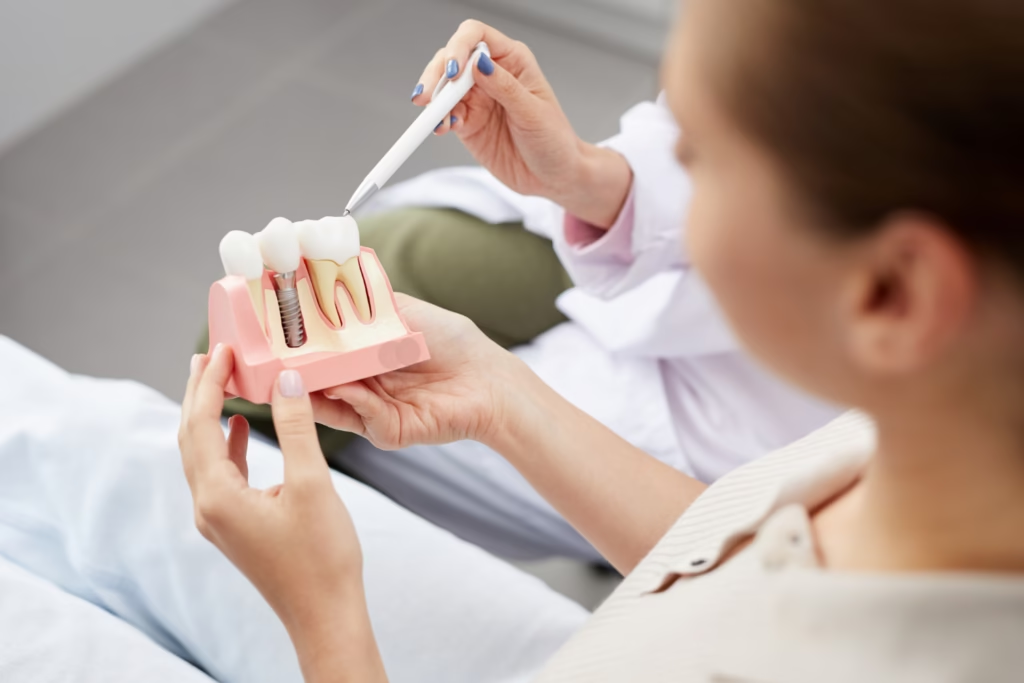
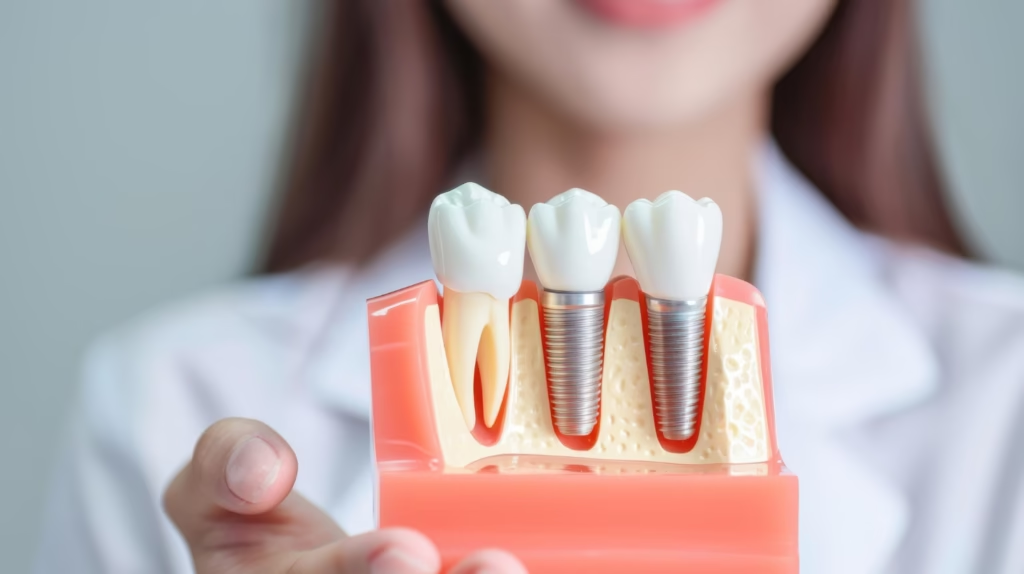
A dental implant is a titanium fixture surgically placed into the jawbone to replace the root of a missing tooth. After the implant has healed and bonded with the surrounding bone, a crown, bridge or denture can be attached to it. For a single missing tooth, an implant is usually restored with a dental crown.
Unlike a conventional bridge, it does not normally require the neighbouring healthy teeth to be reshaped. However, implant treatment requires surgery, sufficient jawbone and a healing period before the final restoration can be fitted in most cases.
2. Dental Bridges
A dental bridge replaces one or more missing teeth using neighbouring teeth or dental implants for support. A conventional bridge consists of an artificial tooth connected to crowns placed over the teeth beside the gap.
These supporting teeth are usually reshaped to make room for the crowns. A bridge may be considered when the neighbouring teeth are strong enough to support it, particularly if they already need crowns.
3. Dentures
Dentures are removable replacement teeth that rest on the gums and may use remaining teeth for additional support. Partial dentures replace one or several missing teeth, while complete dentures are used when all teeth in the upper or lower jaw are missing. Dentures can restore chewing function and appearance without requiring implant surgery.
They are also generally less expensive initially than fixed implant treatment. However, removable dentures may feel less stable when chewing or speaking. They also need to be removed for cleaning and may require adjustments as the gums and jawbone change over time.
Dental Implant vs Bridge vs Dentures: Comparison
Here is a comparison of the three common tooth replacement options.
The comparison above refers to conventional tooth-supported bridges and removable dentures. Implant-supported bridges and dentures have different treatment requirements. There is no single treatment that is suitable for everyone. The most appropriate option depends on the missing tooth area, remaining teeth, gum health, jawbone and treatment needs.
Which Is Better for Replacing One Missing Tooth?
A single missing tooth can often be replaced with a dental implant or bridge. A removable partial denture may also be considered. The condition of the neighbouring teeth is one of the main factors in deciding between these options.
1. Dental Implant for One Missing Tooth
A single dental implant may be suitable when the teeth beside the gap are healthy and there is enough jawbone for implant placement. Because the implant supports its own crown, the neighbouring teeth do not normally need to be reshaped. However, implant surgery is required, and the implant needs time to heal before the final crown is fitted.
2. Dental Bridge for One Missing Tooth
A dental bridge may be considered when the neighbouring teeth can provide suitable support. For example, if the teeth beside the gap have large fillings or already need crowns, a conventional bridge may be an option.
However, this treatment usually requires preparation of the supporting teeth. The amount of preparation and the suitability of a bridge depend on the condition of those teeth and the bite.
3. Partial Denture for One Missing Tooth
A removable partial denture may be considered when surgery is not preferred or when a fixed replacement is not suitable. It generally involves a lower initial cost, although the final fee depends on the material and design. Unlike a fixed implant crown or bridge, a partial denture needs to be removed for cleaning. Some patients may also need time to adjust to wearing it.
What If You Have Several Missing Teeth?
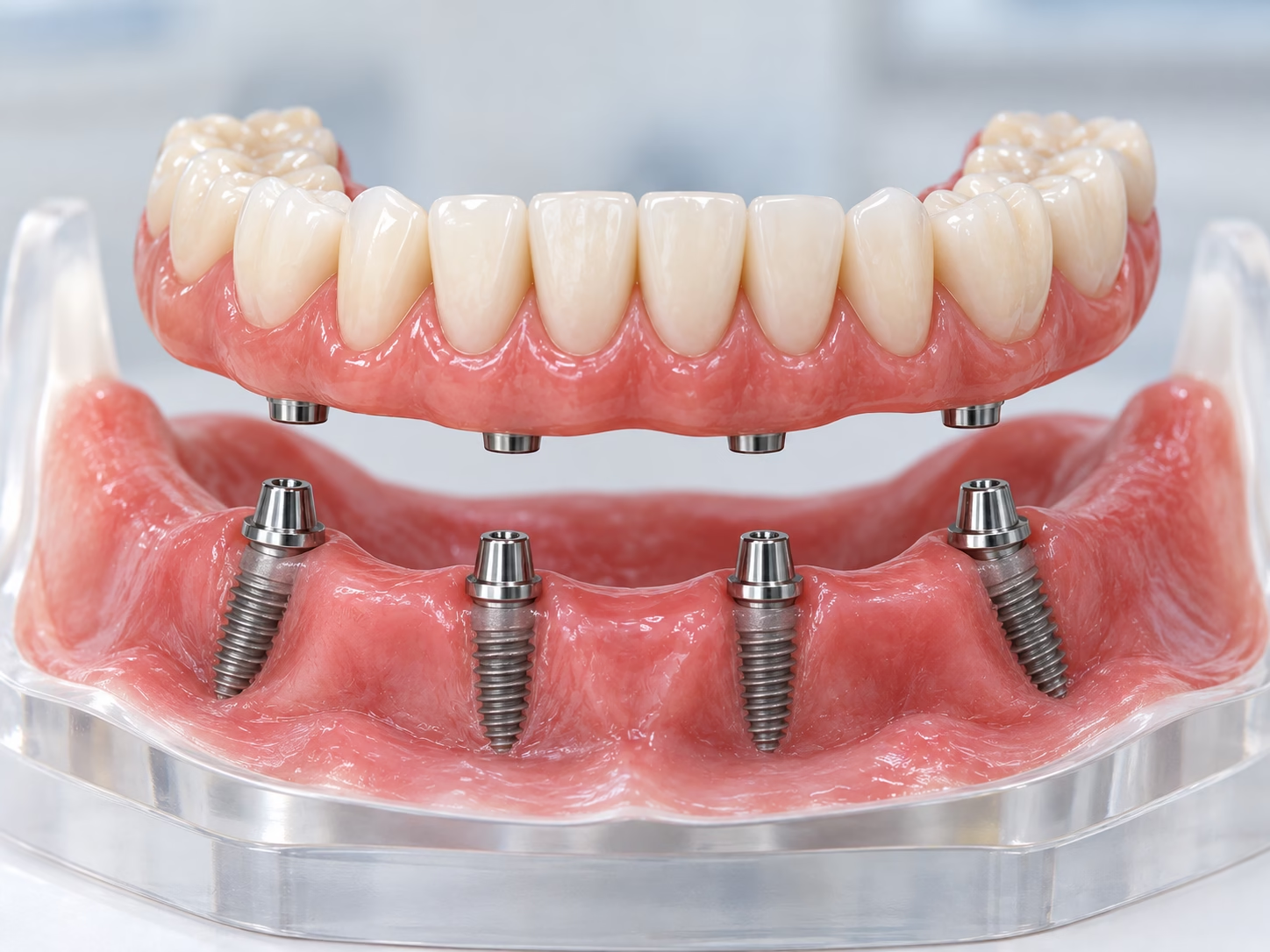
The treatment approach may be different when several teeth are missing, particularly if the gaps are in different parts of the mouth.
Possible options include:
- Implant-supported bridge: Two or more implants may support a bridge that replaces several missing teeth.
- Conventional dental bridge: A bridge may be suitable when there are healthy supporting teeth beside the missing tooth area.
- Partial denture: A removable denture can replace several missing teeth, including teeth in different parts of the mouth.
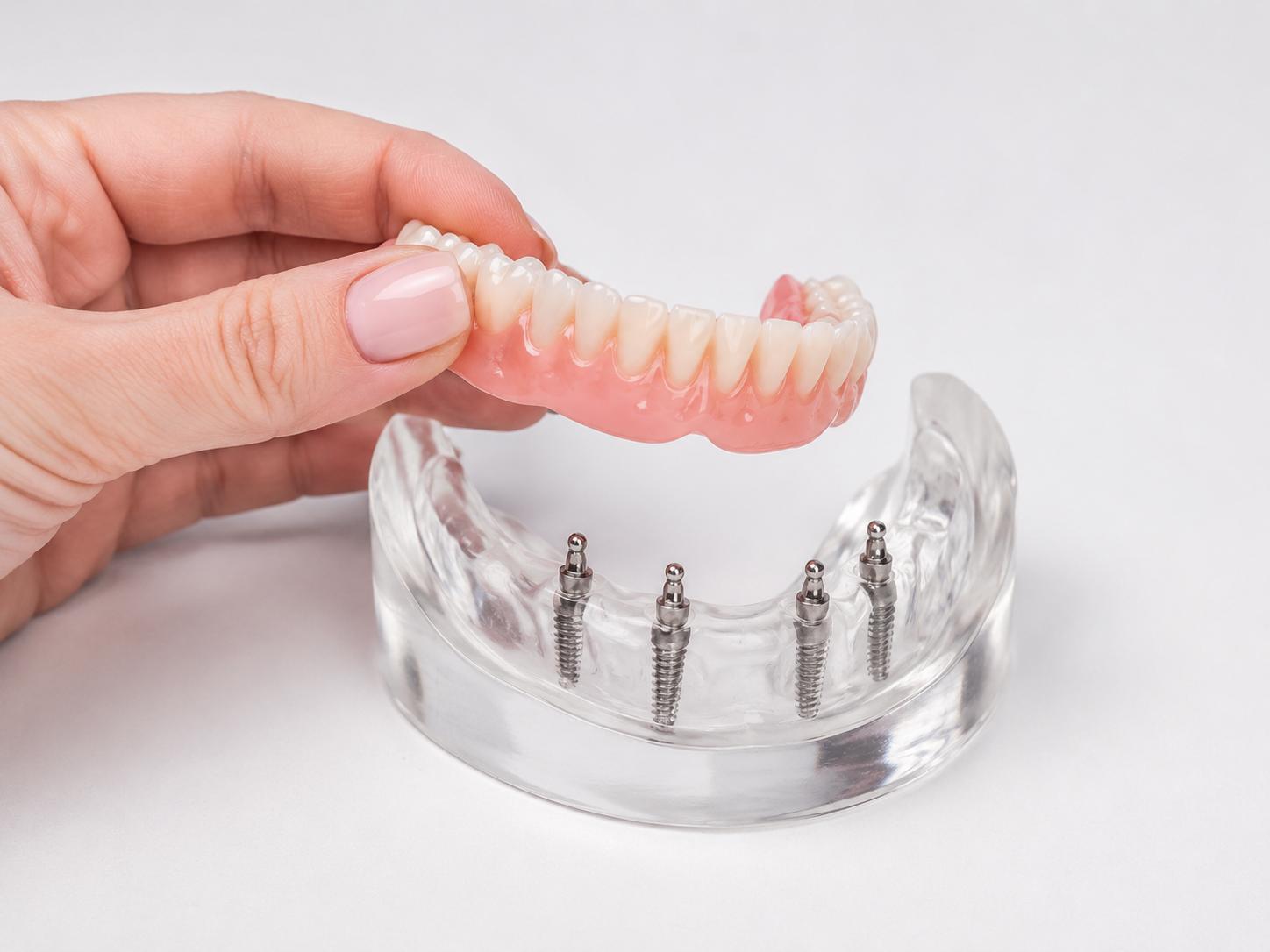
- Implant-supported denture: Dental implants may be used to improve denture stability where suitable.
For patients who have lost most or all of their teeth in one jaw, complete dentures or fixed full-arch implant treatment may be considered. One full-arch approach is All-on-4 dental implants, where four strategically positioned implants support a fixed row of replacement teeth.
However, not everyone with several missing teeth requires All-on-4. If the remaining natural teeth can still be maintained, other treatment options may be more appropriate.
5 Factors to Consider When Choosing Between Dental Implants, Bridges and Dentures
The most suitable tooth replacement depends on more than the number of missing teeth. Here are five important factors to consider.
1. The Condition of Your Jawbone and Gums
Dental implants need sufficient jawbone for support. After a tooth is lost, the surrounding bone can gradually shrink, particularly if the tooth has been missing for a long time. If there is not enough bone, a bone graft or other procedure may be needed before or during implant placement.
Bridges and conventional dentures do not require implant surgery, but healthy gums and suitable supporting teeth are still important.
2. The Health of the Neighbouring Teeth
A conventional dental bridge relies on the teeth beside the gap for support. These teeth must be strong enough to carry the bridge and are usually prepared to accommodate crowns. If the neighbouring teeth are healthy, an implant may be considered because it does not normally require them to be reshaped. If the supporting teeth are already heavily restored or require crowns, a bridge may also be suitable.
3. The Treatment Timeline
Dental implant treatment usually takes several months because the implant needs time to bond with the jawbone. For many patients, this healing period takes approximately 3 to 6 months. Bone grafting or other preparatory procedures may extend the timeline.
Bridges and removable dentures can often be completed within a few weeks, depending on the case. However, a shorter treatment time does not necessarily mean the treatment is more suitable. The condition of the teeth, gums and jawbone must also be considered.
4. Daily Comfort and Maintenance
Dental implants and conventional bridges provide fixed replacement teeth that are not normally removed by the patient. However, both require good oral hygiene. Implant crowns need careful cleaning around the gumline, while dental bridges require cleaning underneath the artificial tooth.
Removable dentures must be taken out and cleaned regularly. Their fit may also change over time as the gums and jawbone change shape. The ability to maintain the replacement teeth properly is an important part of long-term treatment success.
5. Cost and Future Maintenance
Dental implants generally have a higher initial cost because treatment involves surgery, implant components and a final restoration. Bridges and dentures have different fees depending on the materials used, number of replacement teeth and treatment complexity.
However, the initial cost is not the only expense to consider. Implant crowns, bridges and dentures may all need repair, adjustment or replacement over time. An itemised quotation can help compare the treatment costs and understand what is included.
Which Is Cheaper: Dental Implant, Bridge or Dentures?
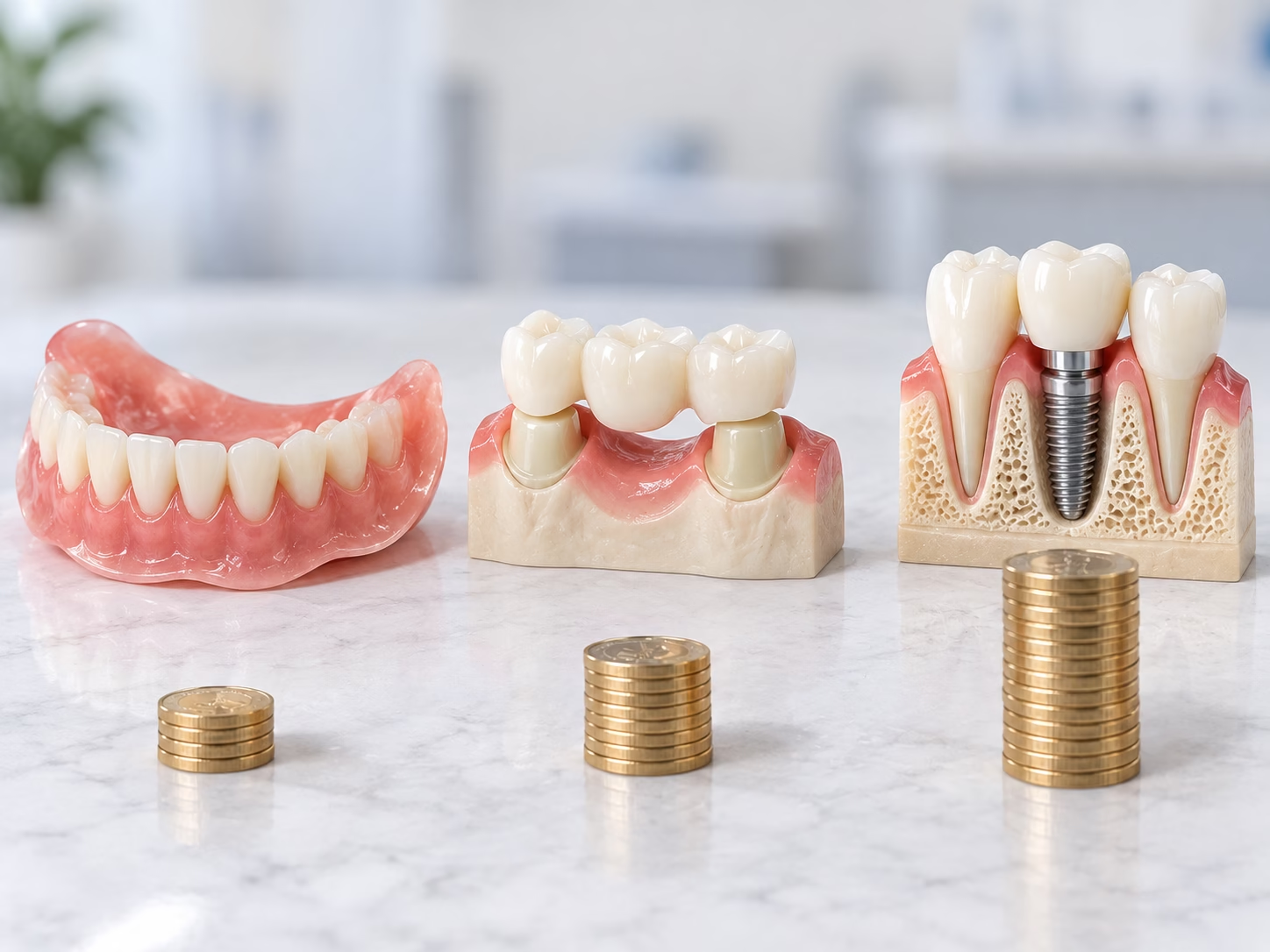
Conventional removable dentures are generally the least expensive option initially, while dental implants usually involve a higher upfront cost. A conventional dental bridge may cost less than a single implant, although the total depends on the number of units, materials and condition of the supporting teeth.
Dental implant fees depend on the number of implants, implant system, crown material and whether additional procedures are required. At Best Smile Dental, the total fee is confirmed after a dental assessment. We will explain the recommended treatment and provide an itemised quotation before treatment begins.
For more information, read our Dental Implant Cost in Singapore: Prices, CHAS & MediSave guide.
Can MediSave or CHAS Be Used?
In Singapore, MediSave may be used for eligible dental implant surgery, subject to CPF withdrawal limits and claim requirements. It generally does not cover the non-surgical crown or abutment. CHAS does not directly subsidise dental implant placement.
However, subsidies may be available for selected dental procedures, including certain consultations, extractions or removable dentures, subject to eligibility and claim conditions. We can explain the applicable fees and potential MediSave or CHAS benefits after assessing the treatment required.
Which Lasts Longer: Dental Implant, Bridge or Dentures?
Dental implants can remain in place for many years with proper care, although they are not guaranteed to last for life. The implant crown may also need repair or replacement earlier than the implant fixture.
Dental bridges can last many years, but their lifespan depends on the condition of the supporting teeth, gum health, biting forces and daily cleaning. Removable dentures may need adjustments, relining or replacement as they wear down or as the shape of the gums and jawbone changes.
Regardless of the treatment chosen, regular dental check-ups and good oral hygiene are important for maintaining the replacement teeth. For more information about implant maintenance and longevity, read our guide on How Long Do Dental Implants Last?
Conclusion
Dental implants, bridges and dentures are all established options for replacing missing teeth, but each works differently. Dental implants provide a replacement supported by the jawbone without usually relying on neighbouring teeth. Conventional dental bridges use adjacent teeth for support, while removable dentures offer another way to replace one or several missing teeth without implant surgery.
The most suitable treatment depends on the number of missing teeth, jawbone condition, gum health, remaining teeth, budget and maintenance requirements. A dental assessment can help determine which option is appropriate and what treatment may involve.
Considering Tooth Replacement in Singapore? Visit Best Smile Dental
At Best Smile Dental in Upper Boon Keng, we provide dental implants, bridges and dentures for patients who need to replace missing teeth. Our dentist will assess the teeth, gums, bite and missing tooth area before recommending a suitable treatment plan. X-rays or a CBCT scan may also be used where needed to assess the jawbone.
We will explain the available options, treatment process, estimated fees and maintenance requirements before you decide whether to proceed. Learn more about our dental implants, dental bridges and dentures, or book an appointment with our dental team for an individual assessment.
Frequently Asked Questions
1. Is a dental implant better than a bridge for one missing tooth?
Not necessarily. A dental implant may be suitable when the neighbouring teeth are healthy and there is sufficient jawbone. A bridge may be considered when the adjacent teeth can provide support, especially if they already need crowns.
2. Which lasts longer, a dental implant or bridge?
Both can last many years with proper care. However, dental implants and bridges have different maintenance needs and risks. Implant longevity depends on gum and bone health, while a bridge also depends on the condition of the supporting teeth.
3. Is a dental bridge cheaper than an implant?
A conventional bridge may have a lower initial cost than a single dental implant. However, fees depend on the bridge design, number of units, materials and treatment required. Long-term maintenance costs should also be considered.
4. Can a denture replace just one missing tooth?
Yes. A removable partial denture can replace one missing tooth or several missing teeth. The design depends on the location of the gap and the condition of the remaining teeth.
5. Do dental bridges damage neighbouring teeth?
Conventional bridges usually require the supporting teeth to be reshaped to make room for crowns. Resin-bonded bridges may require less preparation, but they are not suitable for every case.
6. Can dentures be replaced with dental implants later?
In some cases, yes. Patients who currently wear dentures may be suitable for dental implants or implant-supported dentures. Suitability depends on the remaining jawbone, gum health, medical history and treatment requirements.
7. Are dental implants suitable for older patients?
Age alone does not determine implant suitability. General health, jawbone condition, gum health, medications and the ability to maintain good oral hygiene are more important considerations.