
All-on-4 Dental Implants Singapore: Easy Patient Guide
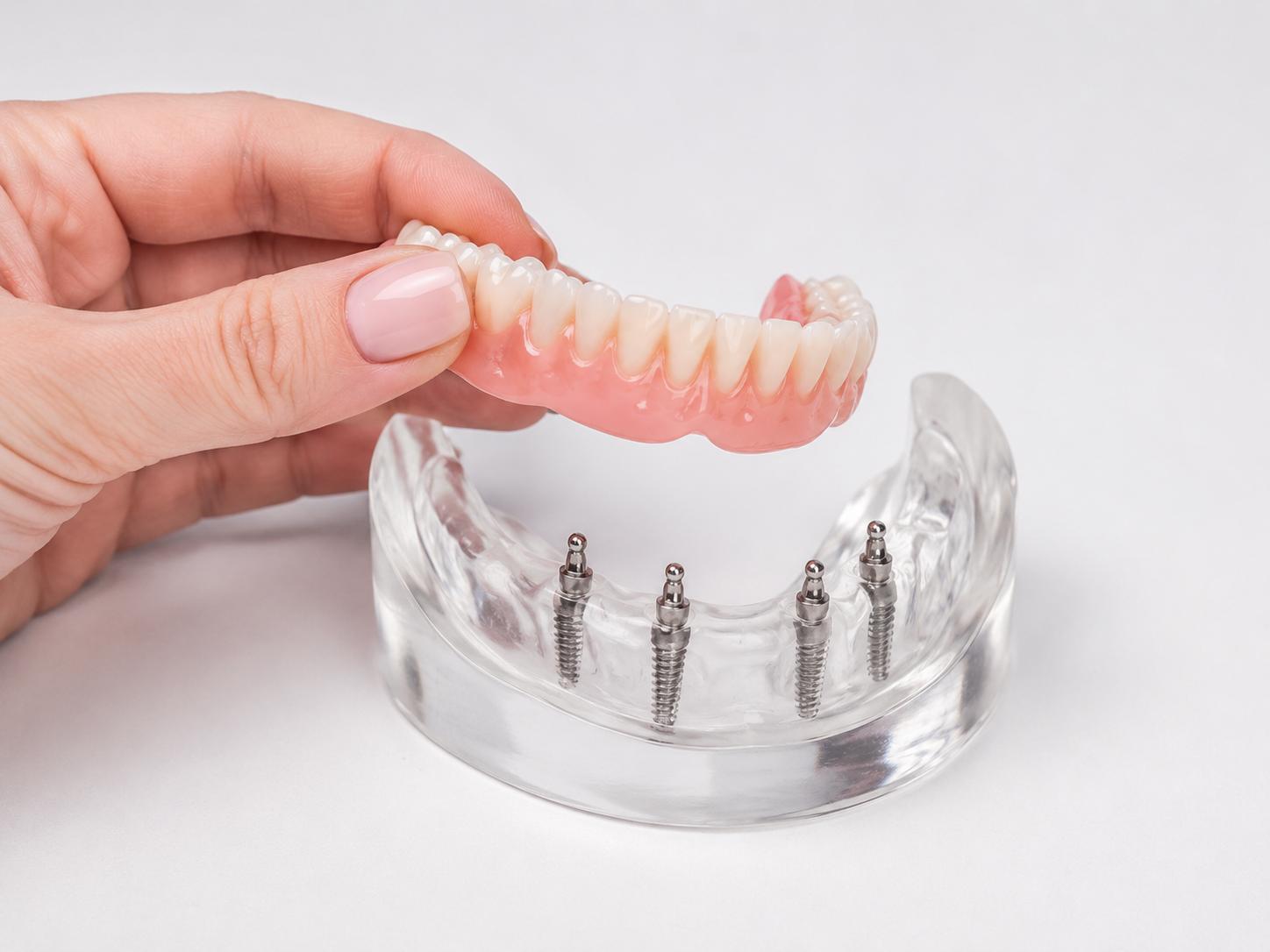
Losing most or all of your teeth can affect how comfortably you eat, speak and smile. While removable dentures can replace missing teeth, some patients prefer a fixed solution that feels more stable in everyday use. All-on-4 dental implants, often known as Teeth-in-a-Day, use four strategically positioned dental implants to support a fixed full arch of replacement teeth.
In suitable cases, temporary fixed teeth may be fitted shortly after implant placement, although the implants still need time to heal before the final restoration is completed. If you are considering All-on-4 dental implants in Singapore, this guide explains how the treatment works, benefits, who may be suitable, what to expect during the procedure, recovery, cost, and how All-on-4 compares with other tooth replacement options.
What Are All-on-4 Dental Implants?
All-on-4 dental implants are a full arch tooth replacement treatment where four dental implants support an entire fixed row of replacement teeth in the upper jaw, lower jaw or both. Instead of placing one implant for every missing tooth, four implants are positioned across the jaw to support a connected dental bridge. The front implants are generally placed more vertically, while the implants towards the back may be tilted depending on the available bone and anatomy.
This approach helps distribute support across the dental arch and can make use of available jawbone more efficiently. Clinical evidence supports four implants as an established option for fixed full arch rehabilitation in appropriately selected patients. The number “four” refers to the supporting implants, not the number of replacement teeth. If you only need to replace one or several missing teeth, conventional dental implant treatment may be more appropriate.
Who May Be Suitable for All-on-4 Dental Implants?

All-on-4 is mainly considered for people who have lost most or all of the teeth in one jaw, or whose remaining teeth have a poor long-term outlook. It may also be considered by complete denture wearers who want to explore a fixed implant supported alternative.
You may be suitable if you:
- Have lost most or all teeth in the upper or lower jaw
- Have several severely damaged, loose or failing teeth
- Currently wear complete dentures
- Have difficulty chewing because of extensive tooth loss
- Want a fixed full arch tooth replacement
- Have some jawbone loss but still have suitable bone for implant placement
Not everyone with multiple missing teeth needs All-on-4. If some natural teeth can still be predictably maintained, preserving them may be more appropriate than removing the entire remaining dentition. Your dentist will assess your teeth, gums, bite, jawbone and medical history before recommending a treatment plan.
What Are the Benefits of All-on-4 Dental Implants?
1. A Fixed Full Arch of Teeth
The replacement bridge is attached to dental implants rather than resting freely on the gums. This means patients do not normally remove their All-on-4 teeth each night like conventional removable dentures.
2. Greater Stability
Because the bridge is supported by implants placed within the jawbone, it can provide greater stability when chewing and speaking compared with conventional removable dentures.
3. Only Four Implants Are Used for a Full Arch
All-on-4 does not require an implant for every missing tooth. Four carefully planned implants work together to support the complete fixed bridge.
4. Bone Grafting May Sometimes Be Reduced
The positioning of the implants can help make better use of available jawbone. For some suitable patients, this may reduce the need for extensive bone grafting, although additional bone procedures can still be necessary depending on the individual anatomy.
5. Temporary Fixed Teeth May Be Possible
One reason All-on-4 is commonly associated with Teeth-in-a-Day is that suitable patients may be able to receive a temporary fixed bridge shortly after implant surgery. The implants will still undergo a healing and integration period before the final restoration is completed.
How Does the All-on-4 Procedure Work?
All-on-4 treatment usually involves several stages. The exact sequence may vary depending on your teeth, jawbone, general health and whether additional procedures are needed.
1. Consultation and Dental Assessment
Your dentist will examine your teeth, gums and bite and review your medical and dental history. Any remaining natural teeth will also be assessed to determine whether they can be maintained.
2. 3D CBCT Scan and Treatment Planning
A three-dimensional CBCT scan allows the dentist to assess your jawbone, bone volume and surrounding structures before planning suitable implant positions. This helps improve treatment planning and determine whether additional procedures may be needed before implant placement.
3. Tooth Extraction if Required
Teeth that are severely damaged or cannot be predictably maintained may need to be removed. Your dentist will first assess whether a tooth can be restored before recommending tooth extraction.
4. Placement of Four Dental Implants
Four implants are surgically placed into planned positions within the jawbone under local anaesthesia. Their positions are planned according to available bone, anatomy and the intended full arch restoration.
5. Temporary Fixed Teeth if Suitable
If the implants achieve sufficient initial stability and the clinical conditions are suitable, a temporary fixed bridge may be attached during the early treatment stage. This allows suitable patients to have fixed temporary teeth while the implants heal.
6. Healing Period
The implants are given time to integrate with the surrounding jawbone through a process known as osseointegration. During this period, patients need to follow the recommended diet, cleaning and aftercare instructions.
7. Final Bridge
Once healing and implant stability are satisfactory, the final full arch bridge can be prepared. The dentist will check its fit, bite, appearance and ability to be cleaned properly before completing treatment.
Do All-on-4 Dental Implants Require Bone Grafting?
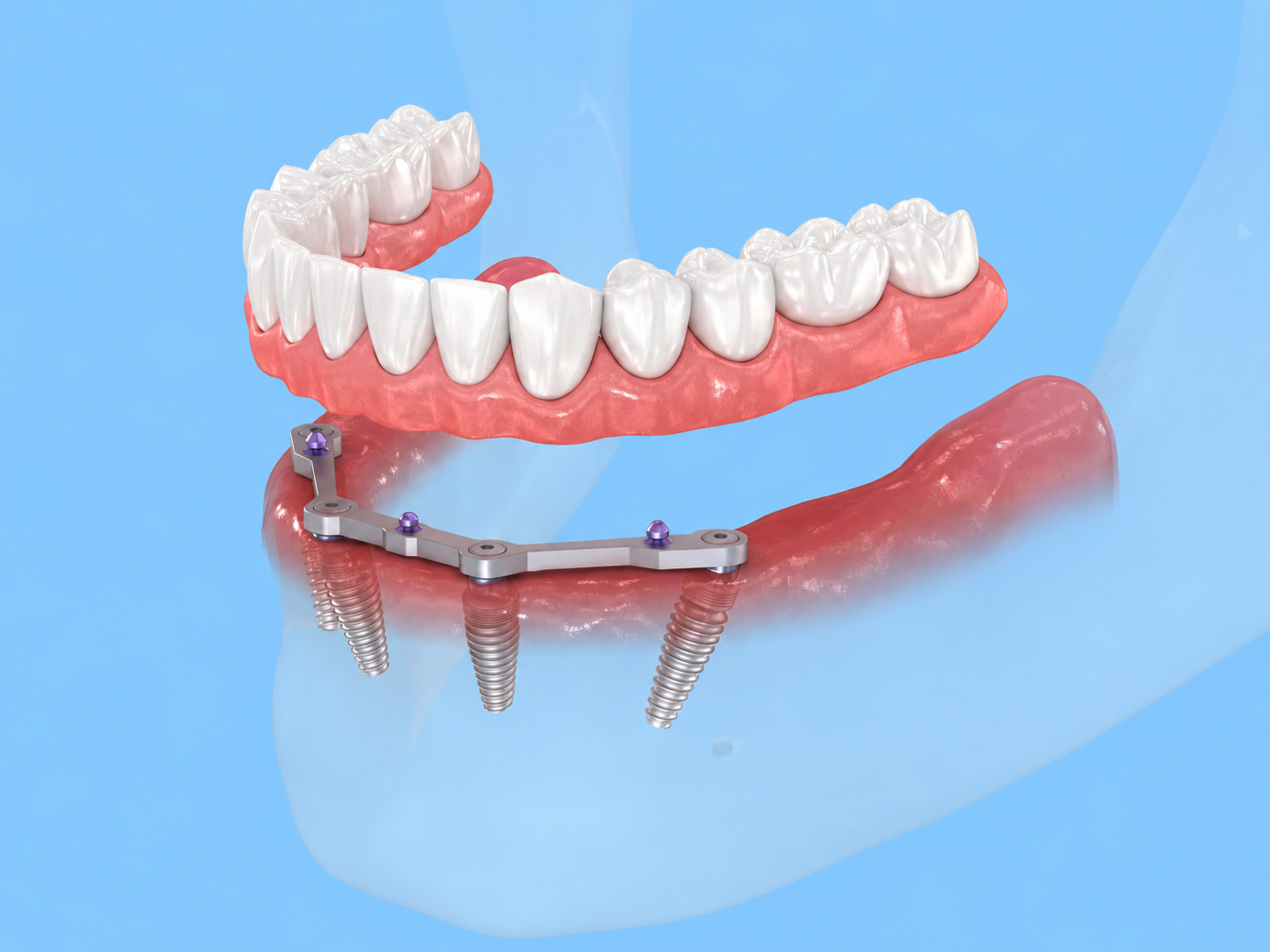
Not every All-on-4 patient requires bone grafting. One advantage of strategically positioning the implants is that suitable areas of existing jawbone can sometimes be used, reducing the need for extensive grafting. However, All-on-4 does not guarantee that bone grafting can always be avoided. Patients with significant bone loss may still require additional procedures. For upper jaw cases, the position of the sinus can also affect available bone, and a sinus lift may be considered in selected situations. A CBCT scan is important for determining whether sufficient bone is available and which treatment approach is suitable.
What Is Recovery Like After All-on-4 Dental Implants?
Most patients experience some swelling, soreness and mild bruising for the first few days after All-on-4 surgery. These symptoms usually improve gradually, although recovery can vary depending on whether extractions, bone grafting or other procedures were performed. During the early healing period, we usually recommend a soft diet to avoid putting too much pressure on the implants and temporary bridge.
Good oral hygiene is also important, especially around and underneath the bridge. Regular follow up appointments allow the dentist to check for healing, implant stability, gum health and the condition of the bridge.
How Much Do All-on-4 Dental Implants Cost in Singapore?
The cost of All-on-4 dental implants in Singapore typically ranges between S$18,000 and S$35,000 per arch before MediSave deductions. The final cost depends on your oral condition, the number of arches treated, the type of bridge used and whether additional procedures are required. At Best Smile Dental, we first assess your teeth, gums and jawbone before confirming your treatment fee.
Contact us to find out more about our current dental implant fees and available treatment options.
Can MediSave Be Used?
MediSave may be used for eligible implant surgery. Under current CPF guidelines, up to S$1,120 per implant inserted may be claimable, subject to eligibility and withdrawal limits.
Can CHAS Be Used?
CHAS does not subsidise All-on-4 implant placement directly. However, eligible patients may receive subsidies for selected related procedures such as consultations, X-rays and extractions. After your assessment, we can explain the estimated total cost, applicable MediSave claim, CHAS subsidies where relevant and expected out-of-pocket amount.
How Long Do All-on-4 Dental Implants Last?
With good oral hygiene and regular dental maintenance, All-on-4 dental implants can last 10 to 20 years or even longer. However, the fixed bridge may wear out or require repair earlier than the implants themselves. Smoking, poor oral hygiene, gum problems and teeth grinding can also affect how long the treatment lasts, which is why regular dental reviews are important.
Conclusion
All-on-4 dental implants can provide a fixed full arch tooth replacement for people who have lost most or all of their teeth. With four strategically positioned implants supporting a complete bridge, the treatment can improve stability while reducing the need for an implant for every missing tooth.
However, All-on-4 is not suitable for everyone. Your remaining teeth, gum health, jawbone, bite and overall health should be assessed before deciding on the right treatment approach.
Considering All-on-4 Dental Implants in Singapore? Visit Best Smile Dental
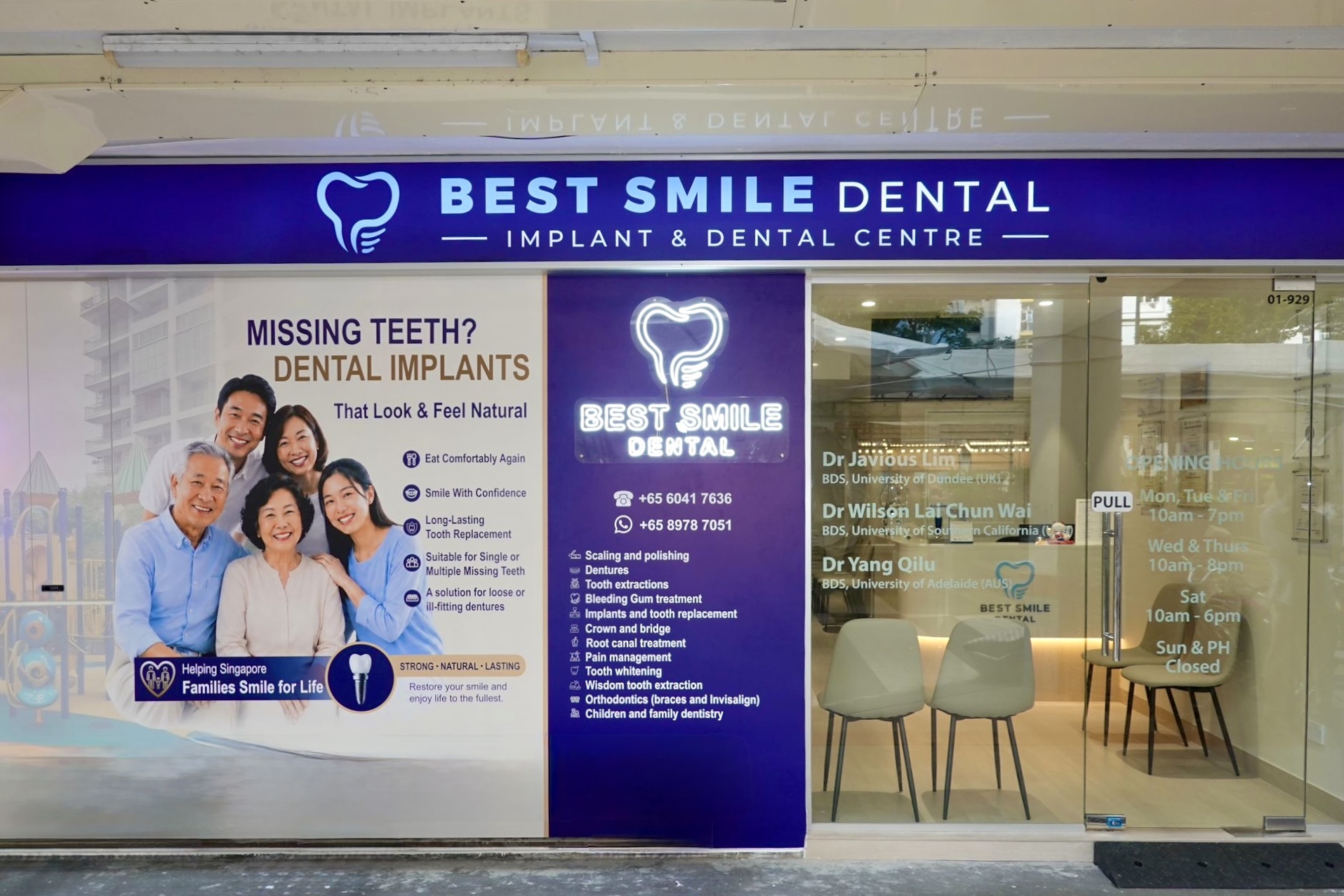
If you are considering All-on-4 dental implants in Singapore, the first step is to find out whether the treatment is suitable for your condition. At Best Smile Dental in Upper Boon Keng, we will assess your teeth, gums, bite and jawbone before recommending an implant treatment plan. A 3D CBCT scan may also be used to assess your available bone and plan suitable implant positions.
We will also explain the treatment process, estimated cost, and applicable MediSave or CHAS benefits before you decide whether to proceed. Learn more about dental implants at Best Smile Dental or book an appointment with our dental team for an individual assessment.
Frequently Asked Questions
1. How many teeth can All-on-4 replace?
All-on-4 is designed to replace a complete upper or lower arch of teeth. Four dental implants support a fixed bridge containing the replacement teeth required for the full arch.
2. Can I get temporary teeth on the same day?
In suitable cases, temporary fixed teeth may be fitted shortly after implant placement. The implants will still need several months to heal and integrate with the jawbone before the final bridge is completed.
3. Do I need bone grafting for All-on-4?
Not always. The position of the four implants can sometimes make better use of the available jawbone and reduce the need for bone grafting. However, additional bone procedures may still be required if there is insufficient bone.
4. How long does All-on-4 treatment take?
The implant surgery may be completed in one treatment stage, but the complete treatment usually takes several months. This allows time for the implants to heal before the final full arch bridge is fitted.
5. Can MediSave be used for All-on-4 dental implants?
MediSave may be used for eligible dental implant surgery, subject to CPF withdrawal limits and individual eligibility. It does not cover every part of the All-on-4 treatment, so we will explain the estimated claim and out-of-pocket cost based on your treatment plan.
6. How long do All-on-4 dental implants last?
With good oral hygiene and regular dental maintenance, All-on-4 dental implants can last 10 to 20 years or longer. The fixed bridge may require maintenance, repair or replacement earlier than the implants themselves.